Lobeliana Study Centre
The Lobeliana Center for Studies (CEL) is a space where research, experimentation, and dialogue converge around plants, fungi, and psychoactive substances.
It brings together the Tupa Archive, Laboratory, Fungarium, Botanical Garden, Publishing House, Residencies, and Outreach Programs, fostering projects that explore these substances in their historical, cultural, scientific, and artistic dimensions.
CEL emerged with the purpose of intertwining ancestral and contemporary knowledge across the Foundation's seven research areas. In this collaborative environment, scientists, cultural agents, and enthusiasts eager to learn come together to develop innovative projects, share valuable experiences, and build collective knowledge approached from diverse perspectives, thus enriching the global and historical understanding of drugs.
CEL RESEARCH LINES
HISTORY: Anthropology, mythology,
religions and native cultures.
BOTANY AND MYCOLOGY: Identification,
taxonomy, cultivation and conservation.
PHARMACOLOGY AND PHYTOCHEMISTRY: Extraction, synthesis, analysis and dosage.
NEUROBIOLOGY: Brain chemistry, sensory effects, and neurogenesis.
PSYCHONAUTICS: Travel maps,
traditional and modern techniques, study
of states of consciousness.
THERAPEUTIC: Psychology, psychiatry,
neurorehabilitation, addictions and
palliative care.
ART: Literature, film, music, and theater
as languages of exploration and memory.
Tupa Archive
It consists of the web platform that organizes and makes available the Foundation's seminars, audiovisual recordings, essays, and digital publications. It not only preserves content but also organizes it into a corpus that reflects the diversity of our research.
Laboratory
The Lobeliana Laboratory is a research center dedicated to the analysis, experimentation, and scientific practice of botanical knowledge and its pharmacological properties. The laboratory presents itself as a state-of-the-art space, equipped with specialized technology and a rigorous approach, whose purpose is to generate evidence and innovative methods for a better understanding of nature's active compounds, their uses, and potential applications. Projects are developed that integrate technical analysis, applied research, and the exploration of new methodological approaches, paving the way for deeper and more technical knowledge.
Areas of Action:

Extractions and chemical analysis of active ingredients.

Cultivation and conservation of species of interest for research.

Studies in applied pharmacology and risk reduction.

Training and collaboration with students, apprentices, and associated researchers.
FUNGARIUM
The Lobeliana Fungarium will be a space designed for the cultivation, reproduction, and study of fungi of ethnomycological relevance. As a specialized center within the CEL (Center for Environmental Studies), the Fungarium provides the necessary conditions for the conservation, research, and experimentation with fungal diversity. In addition to supporting scientific work, we promote the dissemination of knowledge about fungi, their importance in human life, and their global ecosystemic relevance.
Areas of Action:

Controlled cultivation of species of medicinal and psychoactive interest.

Reproduction and preservation of strains for research.

Mycological exploration linked to ecology, conservation and pharmacology.

Educational collaboration with extension and training programs.
BOTANICAL GARDEN
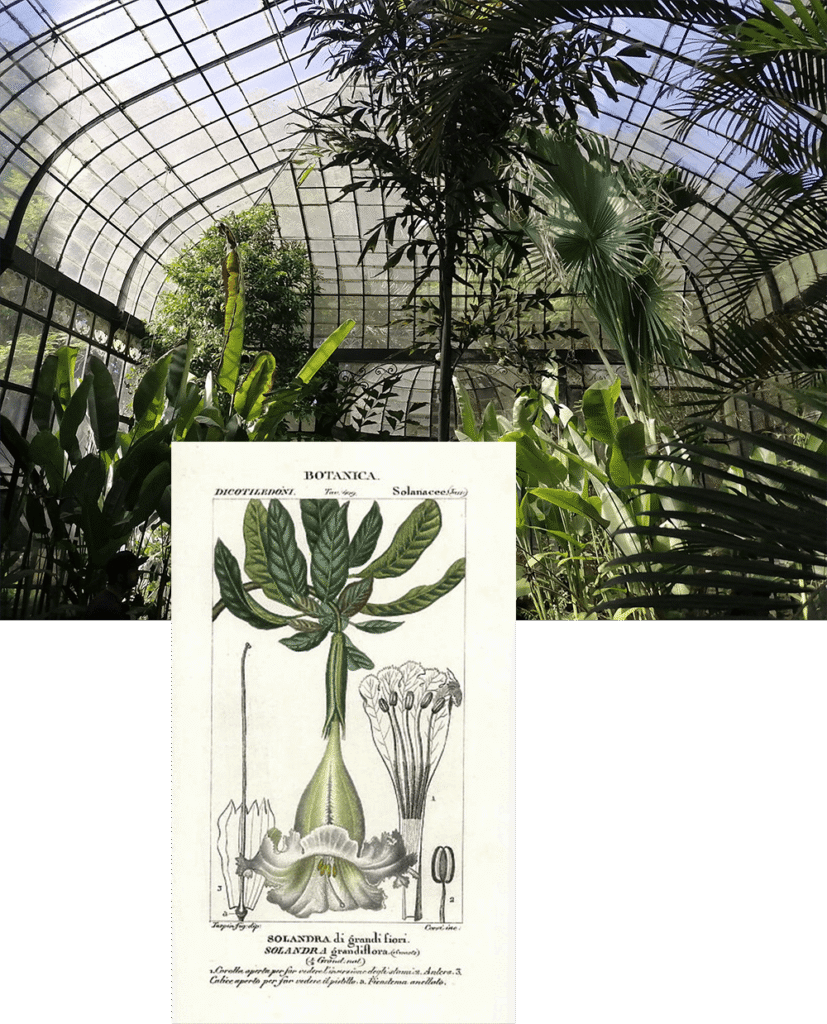
The Lobeliana Botanical Garden will be a space dedicated to the cultivation, conservation, and learning about diverse species. Visitors will be able to observe, record, and experiment with different plants in a living research environment, thus promoting a deep connection between scientific knowledge and the cultural value of plants.
Areas of Action:

Collection of local species from Araucanía, with special attention to their ecological and cultural value.

Climate-controlled greenhouses, which will allow the reproduction of tropical and desert climate environments.

Propagation and cultivation of plants relevant to CEL research.

Educational and residential space, open to researchers and visitors seeking to learn directly from the botanical experience.
The Botanical Garden is integrated into the CEL as a place of observation and care, extending the CEL's research into the living environment.
publisher
The CEL's area dedicated to publishing and disseminating research, essays, and critical editions. Its purpose is to ensure the continuity of the Foundation's projects through books and all types of publications.
Residences
The Lobeliana Residencies are designed as immersive experiences at the CEL, where researchers, artists, and students can develop projects related to our lines of work. The program combines access to the Library, Audiovisual Archive, Laboratory, Fungarium, and Botanical Garden with a natural environment that fosters concentration and creativity. Each residency is tailored to the needs of the participants, offering spaces for study, experimentation, and interdisciplinary dialogue, which opens new networks of collaboration and discovery among those involved.
Extension Programs
The Outreach Programs aim to open the CEL to the community, sharing the knowledge generated through diverse forms of engagement. These include specialized seminars, training workshops, film series, and activities in collaboration with universities, research centers, and cultural organizations, while always prioritizing independent spaces. Through these initiatives, the Foundation promotes critical dialogue and the exchange of knowledge among diverse audiences, thus fostering reflection and the emergence of new narratives.