
Description
HISTORY OF DRUGS
INTERNATIONAL VIRTUAL SEMINAR
Spanish
FUNDS RAISED FOR THE REALIZATION OF THE LOBELIAN LIBRARY PROJECT
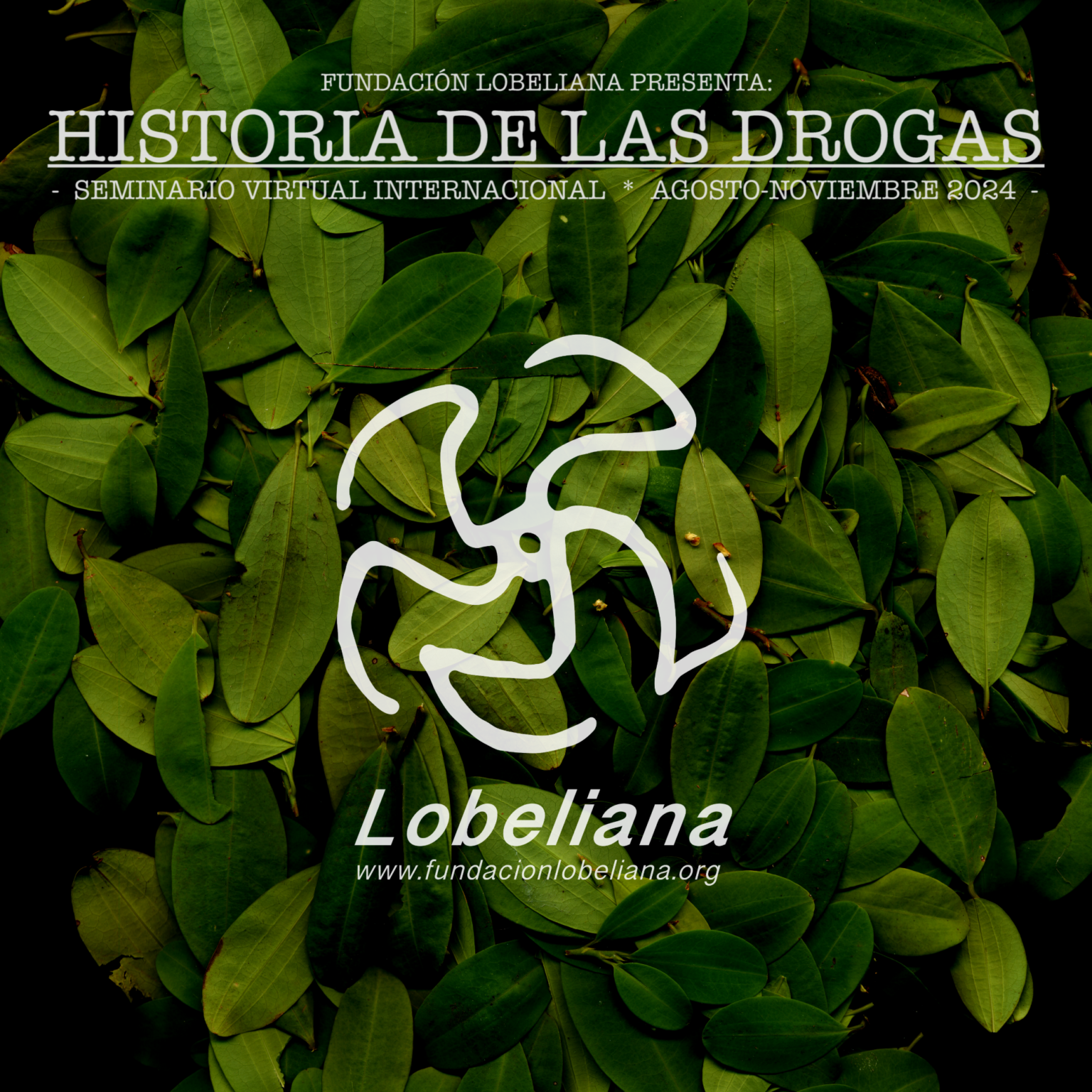
The international virtual seminar “History of Drugs” is an initiative of the Lobeliana Foundation that was held online between August and November 2024, and is part of the foundation's mission to rescue, update, make visible, and make available the accumulated knowledge on natural and psychoactive drugs, in order to demonstrate, through facts, the potential, until now restricted, of many substances irrationally taboo throughout history. This seminar aims to offer artistic, historical, and scientific information on visionary plants and substances, providing a panoramic view from a contemporary, perhaps privileged, perspective that allows us to contemplate the totality of psychoactive and, more precisely, entheogenic beverages and preparations, presenting in each class the particular history of each plant, fungus, and substance. It consists of one introductory class, 13 lectures and 4 discussions. Each lecture tells the general history of one of the 13 selected drugs: Anadenanthera – Wachuma – Cannabis – Alcohol – Coca – LSD – Opium – Iboga – Tobacco – Peyote – Ayahuasca – Psilocybe Mushrooms – Tropical Plants. The lectures last 2 hours, followed by an hour for questions, reflections, and/or comments. The discussions work differently; the first hour is dedicated to opening the conversation among our professors, invited specialists, and/or researchers, who present and discuss the topic at hand. The conversation is open to all participants from the second hour onwards, and will close at the end of the conversation or after 3 hours. The seminar is led by two generations of researchers, including renowned experts in the field such as Giorgio Samorini, Stacy Schaefer, Luis Eduardo Luna, Constantino Manuel Torres, and Jonathan Ott.
Nº TEACHER CLASS
CLASS
1 Introduction to the History of Drugs: An Overview – Benjamín Gelcich / Isbelio Godoy / Francisco Zenteno
2 History of Anadenanthera – Constantino Manuel Torres
3 History of Ayahuasca – Luis Eduardo Luna
4 Panel Discussion 1: Animism, Capitalism, and Postmodernity – Verónica Lema, Martín Stawsky, Luis Eduardo Luna, Benjamín Gelcich, Diego Rodolfo Viegas
5 History of Psilocybe Mushrooms – Francisco Zenteno
6 History of Peyote – Stacy Schaefer
7 History of Wachuma – Isbelio Godoy
8 History of Coca – Jonathan Ott
9 Panel Discussion 2: Medicinal, Recreational, Traditional, and Exploratory Uses – Verónica Lema, Giorgio Samorini, Elisa Guerra
Doce, Luis Eduardo Luna, Leonardo Anconatani, Constantino Manuel Torres.
10 History of Opium – Jonathan Ott
11 History of Iboga – Giorgio Samorini
12 History of Alcohol – Elisa Guerra Doce
13 History of Tobacco – Fernando Carranza
14 Panel Discussion 3: Prohibition and Decriminalization. – Isbelio Godoy, Florencia Corbelle, Ana María Gazmuri
15 History of Tropical Plants – Benjamín Gelcich
16 History of Cannabis – Nicolás Dormal
17 History of LSD – Jonathan Ott
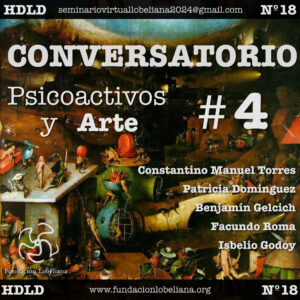
18 Panel Discussion 4: Art and Psychoactive Substances / CLOSING
PROFESSOR BIOGRAPHIES
Constantino Manuel Torres
He has conducted research on ancient cultures of the South-Central Andes since 1982. His work has focused on the oases of San Pedro de Atacama. Torres is also involved in the study of the art of Tiwanaku, the most important pre-Incan Andean civilization.
His books include Anadenanthera: Visionary Plant of Ancient South America (2006), a comprehensive and detailed study of this sacred plant, well-documented in ritual use for at least 4,000 years. He has published numerous articles on the ancestral cultures of Atacama and Bolivia in journals in Chile, the United States, and Europe. Torres has received three Fulbright Scholarships for the study of pre-Columbian art.
Dr. Torres is Professor Emeritus of Art History at Florida International University in Miami. He teaches courses on Pre-Columbian Art of the Andes, Art and Shamanism, Pre-Columbian Art of Mesoamerica, Art and Identity Issues, among others.
Luis Eduardo Luna
Born in Florencia, in the Colombian Amazon region (1947). He studied Philosophy and Letters at the Complutense University of Madrid, and obtained an interdisciplinary master's degree while teaching Spanish and Latin American literature in the Department of Romance Languages at the University of Oslo. He is a former full professor at the Swedish School of Economics, Helsinki, Finland, from which he retired in 2011, and a former professor of Anthropology at the Federal University of Santa Catarina, Brazil (1994-1998). He received a doctorate from the Institute of Comparative Religion at the University of Stockholm (1989) and an honorary doctorate from St. Lawrence University, Canton, New York (2000). Luna is a Guggenheim Fellow and a member of the Linnaean Society of London. He is the author of
Vegetalismo: Shamanism among the Mestizo Population of the Peruvian Amazon (1986), and with
Pablo Amaringo of Ayahuasca Visions: The Religion Iconography of a Peruvian Shaman (1991).
He is co-editor with Steven F. White of
Ayahuasca Reader: Encounters with the Amazon's Sacred Vine (2000, with a new revised edition in 2016), and co-author with Rick Strassman, Slawek Wojtowicz, and Ede Frecska of
Inner Paths to Outer Space: Journeys Through Psychedelics and Other Spiritual Technologies.
In 1986, he co-founded the Usko-Ayar Amazonian School of Painting in Pucallpa, Peru, with Pablo Amaringo, where he served as Director of International Exhibitions until 1994. He has lectured on Amazonian shamanism and altered states of consciousness worldwide and has curated visionary art exhibitions in several countries. He is an honorary research fellow at the University of Exeter, UK. Luis Eduardo Luna is the Director of Wasiwaska.
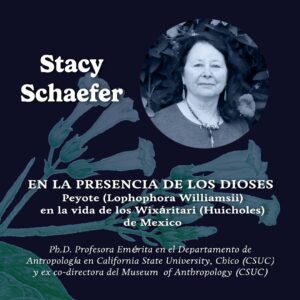
Stacy Schaefer
Professor Emerita in the Department of Anthropology at California State University, Chico
(CSUC) and former Co-Director of the Museum of Anthropology (CSUC).
Dr. Stacy B. Schaefer has been conducting ethnographic field research with the Wixárika (Huichol) people of Mexico since 1977 and with members of the Native American Church in the United States from 1993 to 2015. Her research has focused on traditional beliefs and practices surrounding the use of the peyote cactus (Lophophora williamsii) and its consciousness-altering properties. She is co-editor with Peter T. Furst and contributor to the book
“People of the Peyote, Huichol Indian History, Religion and Survival”, 1996. Dr. Schaefer also published the book “To Think With a Good Heart: Wixárika Women, Weavers and Shamans”, 2002, with a second edition in 2015 titled “Huichol Women, Weavers and Shamans”. From 1991 to 1999, she was an assistant and associate professor at the University of Texas Pan-American along the Texas-Mexico border, during which time she conducted extensive field research among federally licensed Mexican-American peyote dealers and members of the Native American Church (NAC). This work culminated in “Amada’s Blessings From the Peyote Gardens of South Texas,” published in 2015 by the University of New Mexico Press, which won three literary awards in 2016. Currently, Dr. Schaefer has been interviewing cannabis growers and dealers for her research on cannabis culture in Humboldt County, CA. She lives there on the Pacific coast among redwoods, ferns, and rhododendrons with her botanist husband and two wonderful cats.
Jonathan Ott
Writer, phytochemist, and ethnopharmacognosist (a word he coined to describe his own profession).
He currently devotes himself to literature; he has written thirteen books, among them: Pharmacotheon:
Entheogenic Drugs, Their Botanical Sources and History [1993, 1996]; Ayahuasca Analogues:
Pangeic Entheogens [1994, 1995, 2006]; Pharmacophilia, or the Natural Paradises [1997, 1998];
Shamanic Snuffs or Entheogenic Errhines [2001; with a forthcoming edition in
[in Spanish]; and Coca und Kokain [in German, with Christian Rätsch, 2003; partial versions in Spanish and English forthcoming]. His most recent book (and second literary work) is Mute Words. Silent Spectres of Speech / Sigil–Skeletons of Sound: The Ecstasy of Speech (still unpublished: it will eventually be written in Spanish as well; soon to be published in both languages). He is working on (a second volume for Pharmacophilia): Pharmacomania, or Mr. Jekyll and Dr. Hyde: The Literary Creation of “Addicts” and “Alcoholics” (which will be released soon in Spanish and English: the former as part of a series of his books in deluxe editions). He also plans to publish seven titles (both in Spanish and English) as e-books.
Giorgio Samorini
Giorgio Samorini (Bologna, May 26, 1957) is an independent and self-taught Italian researcher specializing in psychoactive fungi and plants. He was co-founder (1991) and president (1995-1997) of the Italian Society for the Study of States of Consciousness in Rovereto. In 1997, he founded and directed, together with the botanist Francesco Festi, the journal Eleusis – Psychoactive Plants and Compounds, published by the Civic Museum of Rovereto. Has published
articles in various scientific journals, such as Annali Museo Civico Rovereto, Bollettino
Camuno Studi Preistorici, Archeologia Africana, Medicina delle Tossicodipendenze, Pagine di
Mycology, Acta Phytotherapeutica, International Journal of Medicinal Mushrooms and the Jahrbuch
für Ethnomedizine.
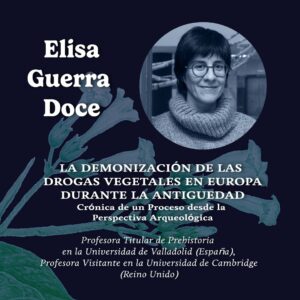
Elisa Guerra Doce
Elisa Guerra Doce is a Professor of Prehistory at the University of Valladolid (Spain)
since 2013. She was a Visiting Professor at the University of Cambridge (United Kingdom) between
2022 and 2023, developing a project on altered states of consciousness and differentiation
in the Iberian Peninsula during the Copper Age. One of her lines of research is
focused on the role that psychoactive substances (plant drugs and fermented beverages)
played in the social dynamics of prehistoric communities in Europe during the
Neolithic and Bronze Age, a topic still largely unexplored in European Prehistoric Archaeology. In her research, Elisa aims to culturally contextualize the use of these substances. To this end, she undertakes a contextual analysis of the spaces of production and consumption from a multidisciplinary perspective, integrating diverse sources of information (material culture, archaeobotanical remains, artistic expressions, written references, anthropological parallels, ethnobotany, and chemical analyses). One of her achievements in this field has been the detection of polydrug use of plant-based drugs at a Late Bronze Age Spanish site, dated to around 1000 BC, based on the chemical analysis of hair samples—a study that has
recibido gran atención mediática por tratarse de la primera prueba directa del uso de drogas en la
Europa prehistórica.
Benjamin Gelcich
Filmmaker (Chilean Film School), musician (self-taught), neurorehabilitation specialist (Luis Krebs Institute), amateur ethnobotanist for 15 years, and founder of the Lobeliana Foundation. I have developed my research and experimentation in film, art, and consciousness, creating experimental films, performances, and video installations based on cutting-edge scientific content (“Anadenanthera,” “boca pariamanu remix,” “Caosnautica,” “Anadenanthera installation,” among others), and recently, the book “Psychoactive Mushrooms of Chile” (2024), published by the Lobeliana Foundation. I have participated by presenting my work at international art and psychoactive substance events (First International Symposium on “Anadenanthera” [an event inspired by my video “Anadenanthera”], in Cusco, Peru; “Andean Labs”, Huaraz and Chavín, Peru; and in four long-term informal residencies: two two-month periods at the “Wasiwaska” ethnobotanical research center in Brazil, directed by researcher L. E. Luna; two two-month periods in Miami, USA, with researcher M. C. Torres; one month in Mexico with writer and ethnobotanist J. Ott; and two weeks at my home in Pucón, Chile, with J. Ott, M. C. Torres, D. Torres, G. Samorini, S. Schaefer, and L. E. Luna.
Francisco Zenteno
Francisco Zenteno is a transpersonal humanist clinical psychologist, specializing in psychedelic-assisted psychotherapy, dedicated to the study and development of diagnostic and treatment methodologies from the perspectives of intercultural medicine, psychology, and personal transformation. He is trained in thanatology, microbiota, and other disciplines complementary to therapeutic practice.
He is the co-founder and director of the Azul Micelio Foundation, an organization dedicated to the care and protection of psilocybin mushrooms and their users, as well as to the education, dissemination, and research of the diverse uses and innovative applications of these mushrooms in the clinical context as health agents.
He currently participates in various training and teaching programs on topics related to intercultural medicine and the therapeutic and ritual use of entheogens, particularly psilocybin mushrooms.
Isbelio Godoy
Researcher of Art, Culture, and Indigenous Traditional Medicine (LINCEpd Laboratory – UNQ, Quilmes). Member of CECCa (Center for Studies of Cannabis Culture and Psychoactive Substances). Director at Puma LLakhan. An artist without formal academic training, developed independently and through self-directed learning in diverse cultural contexts and in an interdisciplinary manner. The development of his artistic practice, research methodologies, and learning in Indigenous Traditional Medicine is based on years of direct practice in these fields, with intercultural engagement, and with legitimate guidance and teaching in accordance with the traditions of various peoples. Both her artistic work, her work in the field of Indigenous Traditional Medicine, and her motivation within the field of intercultural research are permeated by the Andean-Amazonian Cosmovivencia, by the epistemology that arises from its encounter with modern culture, and by the political motivation to defend this knowledge, to value and put it into practice through pedagogy, and to reclaim the ancient knowledge of indigenous peoples in a context of post- coloniality and political persecution.
Fernando Carranza
He holds a degree in archaeology from the Pontifical Catholic University of Peru. He also has a Master's degree in Biochemistry from the Faculty of Medicine of San Fernando – UNMSM
and a diploma as an Ayurvedic medicine therapist from the Vedika Institute of Lima. He works as a researcher in the archaeobotany and ethnobotany of psychoactive and medicinal plants used by traditional and archaeological cultures. He is currently pursuing his doctorate in anthropology at Tulane University in New Orleans.
Nicolas Dormal
Nicolás Dormal, Director and co-founder of Fundación Daya, an organization created in 2013,
dedicated to facilitating access to cannabis and reforming drug policy in general. With Daya,
they obtained the first legal permit for the cultivation of cannabis for medicinal purposes in
Latin America in 2014 and have guided more than 100,000 patients with doctors specializing
in this therapy. They also offer courses on the medicinal use of cannabis to healthcare professionals, reaching more than 1,000 professionals who have completed their training programs.
ABOUT BIBLIOTECA LOBELIANA
The Lobelian Library was born with the idea of preserving intact, valuable libraries of researchers involved in the study of psychoactive drugs. This will be a library of libraries, a museum of books, because we believe that the value of a collection is unique, much greater than the sum of its books. Those who are donating their libraries to us are researchers with long careers, authors of influential books on the subject, and key figures in the history of psychoactive substances. For this reason, we consider it important to keep together, and in separate rooms, the collections that fueled each particular body of work. To date, we have 6,000 books. Our library follows in the footsteps of the libraries of ancient paganism, those temples of knowledge burned by ignorant and intolerant people.